Censorship resistance 2026 limits to account for
The regulatory landscape is shifting from passive tolerance to active restriction. Governments in the EU and US are moving to classify censorship-resistant tools as illicit infrastructure, forcing developers to choose between compliance and obfuscation. This 2026 constraint means that "privacy by default" is no longer sufficient; tools must now prove they are not designed to evade lawful surveillance.
Censorship resistance is no longer just a technical ideal; it is a legal liability. For decentralized storage and permissionless blockchains, this means that nodes refusing to censor transactions face increasing pressure from internet service providers and exchange regulators. The cost of maintaining true neutrality has skyrocketed, as seen in the tightening of VPN bans and the scrutiny of on-chain auction mechanisms where transaction inclusion is explicitly tied to tips.
| Feature | 2024 Status | 2026 Constraint |
|---|---|---|
| Privacy VPNs | Widely available | Banned in multiple jurisdictions |
| On-chain auctions | Tip-based inclusion | Subject to MEV regulation |
| Decentralized storage | Open access | Node compliance pressure |
The core question for builders is no longer if they can resist censorship, but whether their architecture can survive regulatory fragmentation. As seen in Web3 wartime communications, resilience now requires redundant identity layers and decentralized coordination that do not rely on centralized entry points.
Censorship resistance 2026 choices that change the plan
Evaluating censorship resistance in 2026 requires looking past the marketing slogan to the actual mechanics of how transactions or messages survive suppression. The landscape has shifted from pure anonymity to a complex balance between transaction cost, network latency, and regulatory exposure. Readers must weigh these concrete factors against their specific risk profile.
Transaction Cost vs. Speed
The most direct tradeoff is economic. Research defines censorship resistance in on-chain auctions as the cost an adversary must pay to block a transaction for a fixed interval [src-4]. In practice, this means higher tips or fees often buy faster inclusion, but also higher visibility. Low-fee transactions may sit in mempools indefinitely, effectively censored by neglect rather than active blocking. Users must decide if paying a premium for speed is worth the increased on-chain footprint.
Network Latency vs. Anonymity
For decentralized communication tools like Nym, latency is the enemy of usability. Routing traffic through multiple mix-nodes provides strong anonymity but adds significant delay [src-1]. In 2026, as governments target VPNs and mixers, the tradeoff sharpens. A faster connection might use fewer nodes, reducing anonymity. A slower, multi-hop path offers better privacy but may fail in real-time applications like VoIP or live trading. Users must choose between seamless experience and robust opacity.
Regulatory Exposure vs. Decentralization
Not all censorship-resistant tools are equally decentralized. Some projects rely on centralised infrastructure for key components, creating single points of failure for regulators [src-2]. Bitcoin remains highly resistant because its validator set is globally distributed and permissionless [src-3]. In contrast, newer L2 solutions or centralized relayers may offer speed but can be pressured by authorities. Evaluating the actual node distribution and governance structure is critical for long-term resilience.
| Factor | High Resistance | Low Resistance | Primary Risk |
|---|---|---|---|
| Transaction Fees | Low fees, slow inclusion | High tips, fast inclusion | Neglect-based censorship |
| Network Path | Multi-hop mixers | Direct connections | Latency & usability |
| Infrastructure | Permissionless validators | Centralised relayers | Regulatory seizure |
| Identity | Pseudonymous | KYC-linked | Doxxing & blacklisting |
The goal is not absolute invisibility, but strategic resilience. Understanding these tradeoffs allows users to select tools that align with their specific tolerance for cost, speed, and regulatory risk.
How to Choose the Right Censorship-Resistant Tool
The 2026 regulatory landscape is no longer just about encryption; it is about enforcement. As the EU and US tighten controls on privacy infrastructure, selecting a censorship-resistant tool requires moving beyond marketing claims to verify actual resilience. You are not just buying software; you are choosing a defense strategy against state-level interference.
Follow this practical framework to evaluate tools based on their ability to withstand the new mandates.
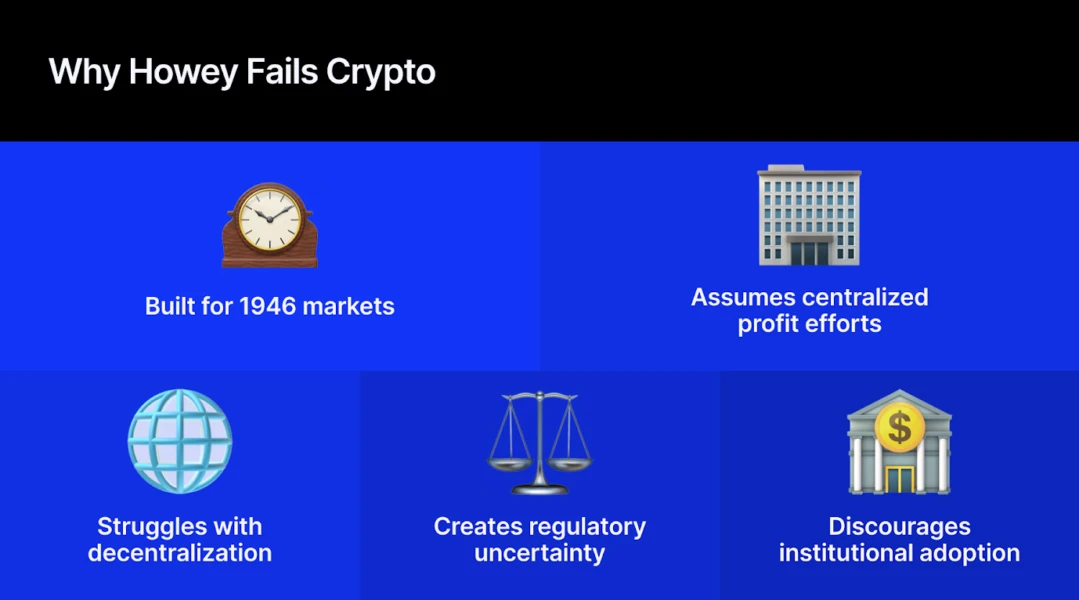
Look for tools that distribute control across independent nodes rather than relying on centralized servers. Censorship-resistant systems, like NymVPN’s 2026 roadmap, prioritize decentralized coordination to prevent single points of failure. If a company controls the network, regulators can compel it to block access or hand over data. True resistance requires that no single entity can shut down the service.
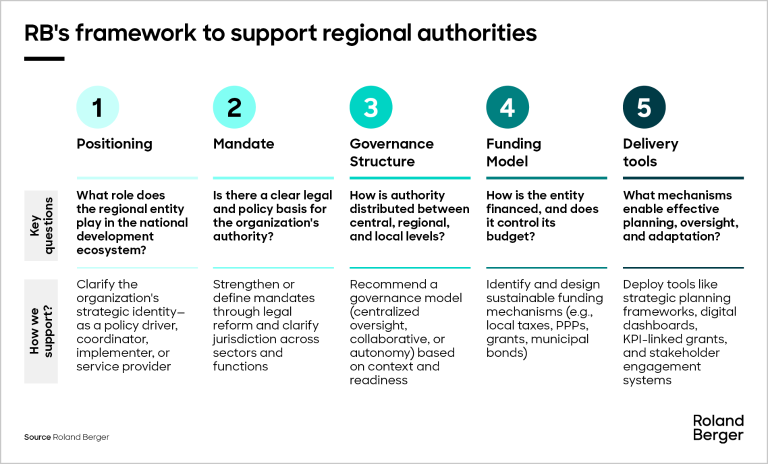
Standard encryption is no longer enough. Regulators can identify encrypted traffic patterns even if they cannot read the content. Choose tools that use traffic obfuscation to make censorship-resistant communication look like ordinary web browsing. This "chameleon" technique prevents automated filters from flagging and blocking your connection before it even begins.
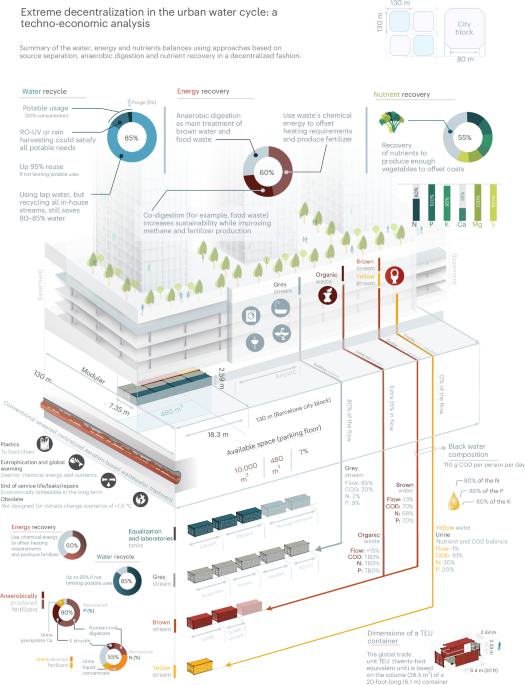
For tools operating on blockchains, censorship resistance is often measured by the cost to suppress a transaction. In onchain auctions and decentralized storage, the adversary’s cost to censor a transaction for a fixed interval is a key metric. If the tip required to bypass censorship is lower than the value of the transaction, the system is effectively censorable. High transaction costs for suppressors indicate stronger resistance.

Avoid tools hosted in jurisdictions with aggressive data retention laws or mutual legal assistance treaties that bypass due process. Even decentralized tools have human maintainers. Ensure the development team and infrastructure are distributed across multiple legal regimes to prevent a single government from forcing a compliance shutdown.


As an Amazon Associate, we may earn from qualifying purchases.
By focusing on these concrete checks, you can separate tools that offer genuine censorship resistance from those that merely promise it. The goal is not just anonymity, but the structural ability to operate when access is actively contested.
Spotting Weak Censorship Resistance
New regulations in the EU and US are tightening the net around decentralized tools, but not all solutions hold up under pressure. Many popular options rely on centralized infrastructure or weak cryptographic guarantees that crumble when targeted by state-level adversaries. Before deploying these tools for sensitive coordination, you need to audit their actual resistance to blocking, not just their marketing claims.
The "VPN Wrapper" Trap
Many apps brand themselves as censorship-resistant by wrapping traffic in standard protocols. This is a weak option. If the underlying server is hosted on a centralized cloud provider, a single subpoena can sever access for thousands of users. True resistance requires a distributed network of nodes, not just encrypted tunnels. Tools like Nym are building layered privacy networks to mitigate this, but most consumer VPNs remain single points of failure.
Centralized Identity Anchors
Some platforms claim resistance but require KYC-compliant identity verification for wallet recovery. This creates a fatal flaw. If a government demands user data to unblock an address, the system is no longer censorship-resistant. Bitcoin remains robust here because no central entity controls the ledger, but many "decentralized" social or storage apps still rely on centralized identity providers that can be legally compelled to act.
Weak Consensus Mechanisms
Censorship resistance also depends on the consensus layer. Proof-of-Stake systems, while energy-efficient, can be vulnerable to exchange-level censorship if validators are concentrated. Bitcoin’s Proof-of-Work remains the gold standard for resistance, but its high cost creates trade-offs in speed and accessibility. When evaluating tools, check if the validator set is truly decentralized or if a few entities control the majority of stake.
Censorship resistance 2026: what to check next
New EU and US regulations are tightening the definition of censorship resistance. As governments classify decentralized tools differently, the practical application of these technologies shifts from theoretical ideal to regulatory compliance.
What is censorship resistance in Onchain auctions?
In onchain auctions, censorship resistance measures the cost for an adversary to block a transaction over a set period. It is calculated as a function of the associated tip paid to validators. Higher tips increase the economic barrier for censors, ensuring your bid remains visible and executable even in congested environments.
Is Bitcoin censorship resistant?
Bitcoin’s design inherently resists censorship. No government, company, or individual can stop, undo, or blacklist specific wallet addresses or transactions on the mainnet. While nodes may refuse to relay transactions from known illicit addresses, the protocol itself ensures that any transaction with sufficient fees will eventually be included in a block.
What does censorship resistance mean for decentralized storage?
For decentralized storage, censorship resistance means no single entity can remove or alter data stored across the network. Unlike centralized cloud providers that may comply with takedown requests, decentralized networks distribute data fragments globally. This makes it practically impossible for regulators to erase specific files without destroying the entire network’s integrity.
Can regulators block censorship-resistant tools?
Regulators are increasingly targeting the on-ramps and off-ramps rather than the underlying protocols. While blocking access to decentralized VPNs or mixers is difficult, authorities can restrict fiat gateways. Users must navigate this by using peer-to-peer exchanges and self-custody wallets to maintain true access to censorship-resistant networks.
No comments yet. Be the first to share your thoughts!