
Why censorship resistance matters in 2026
By 2026, the era of voluntary deplatforming has given way to active state-level internet fragmentation. Governments across the Middle East and the European Union are increasingly targeting VPNs and decentralized protocols to control information flow. This shift means that relying on traditional tech monopolies for communication is no longer just a convenience issue; it is a structural risk to your ability to speak and connect freely.
Censorship resistance ensures that access to information and communication channels remains unhampered by central authorities. As noted in recent research on multi-proposer BFT protocols, the industry is now prioritizing systems that can withstand coordinated suppression attempts while maintaining high throughput. Without this resilience, users face the reality of sudden, irreversible silencing by those who control the underlying infrastructure.
Decentralized infrastructure offers the necessary alternative. By distributing control across a network, these platforms remove the single point of failure that authoritarian regimes exploit. For those needing to protect their digital presence, choosing tools with built-in censorship resistance is no longer optional—it is essential for maintaining autonomy in an increasingly controlled digital landscape.
5 Censorship-Resistant Platforms for 2026: Decentralized Social & Messaging
In 2026, censorship resistance is no longer a niche feature but a baseline requirement for digital autonomy. We evaluated five platforms that prioritize decentralized social and messaging protocols to ensure your communications remain uncensorable and secure.
-
Mastodon federated network architecture
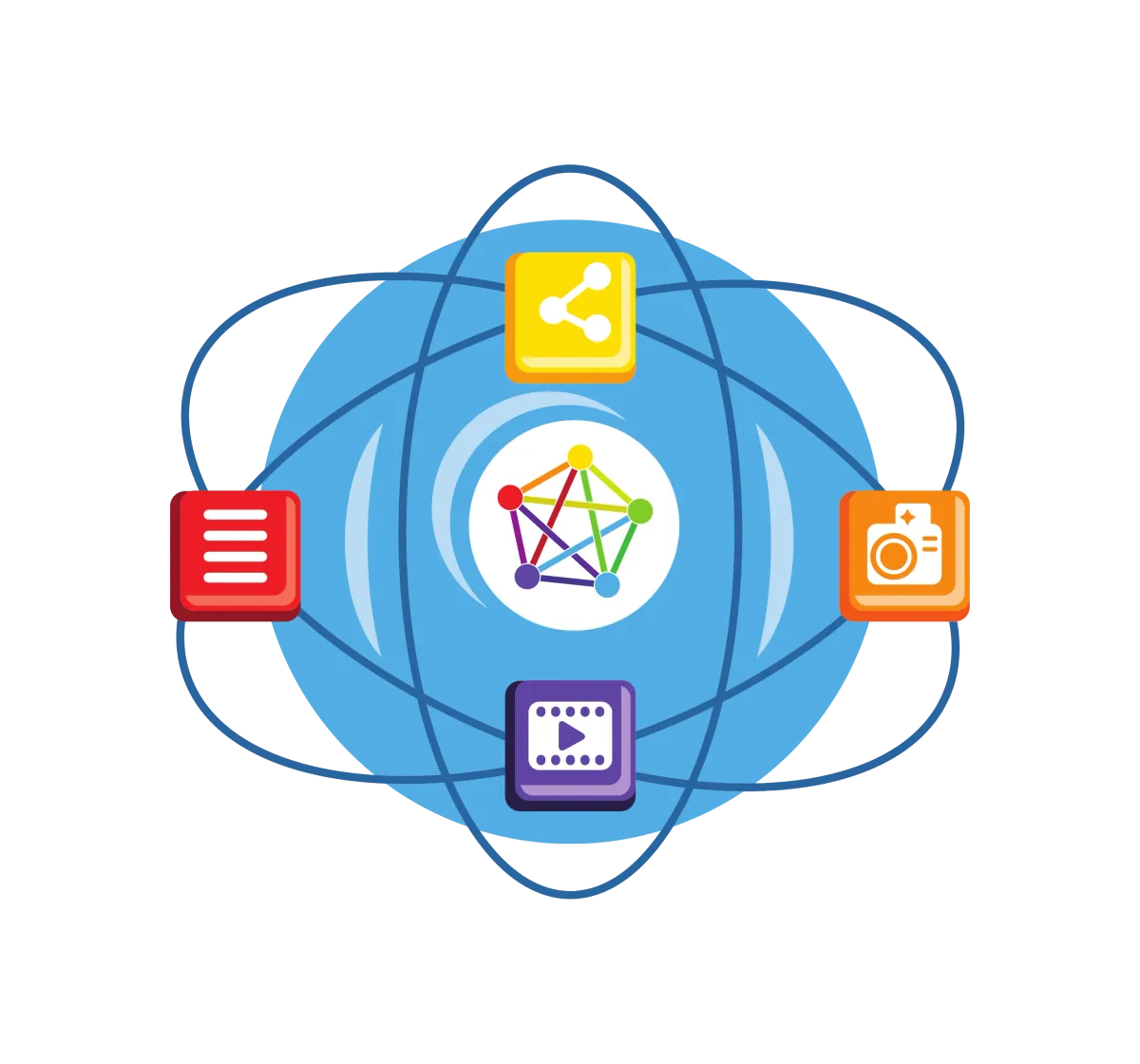
Mastodon operates as a federated network rather than a single centralized entity. This structure distributes data across thousands of independent servers, preventing any single authority from silencing users globally. If one server bans an account, the user can migrate their identity to another instance while retaining their social graph. This resilience ensures that censorship resistance remains robust against coordinated takedown attempts in 2026. -

Bluesky social protocol implementation
Bluesky utilizes the AT Protocol to decouple social graphs from the underlying software infrastructure. Users own their identity across different applications, making it difficult for any single provider to enforce blanket censorship. This portability allows communities to self-govern their content moderation policies without relying on a central corporate entity to dictate acceptable speech standards for the entire network. -

Nostr decentralized messaging relay
Nostr connects clients to a distributed network of relays, storing messages across multiple independent servers. Since no single relay controls the entire network, banning a user from one server does not silence them elsewhere. This redundancy ensures that communication channels remain open even if specific nodes are pressured to remove content, providing a resilient layer for free speech in 2026. -

Threads censorship resistance analysis
Threads operates as a centralized platform owned by Meta, offering limited inherent censorship resistance compared to decentralized alternatives. While it provides robust moderation tools, the central authority retains final control over content removal and account suspension. Users seeking true sovereignty over their digital identity must recognize that this platform’s structure inherently relies on corporate governance rather than distributed consensus. -

Lemmy federated forum structure
Lemmy functions as a federated link aggregator similar to Reddit but built on the ActivityPub protocol. Communities, or communities, operate on independent servers, allowing users to host their own instances or join existing ones. This distributed model prevents any single organization from shutting down the entire platform, ensuring that niche discussions and controversial topics remain accessible despite external pressure.
How decentralized protocols stop censorship
Censorship resistance in 2026 relies on mathematical guarantees rather than policy promises. Decentralized social and messaging platforms use three primary technical mechanisms to ensure that content cannot be arbitrarily removed or blocked by a central authority: Byzantine Fault Tolerant (BFT) consensus, onion routing, and federation.
Byzantine Fault Tolerant consensus is the bedrock of censorship-resistant blockchains. Unlike traditional systems where a single server can delete data, BFT protocols require a distributed network of nodes to agree on the state of the ledger. Modern multi-proposer BFT protocols, as detailed in recent cryptographic research, are specifically designed to separate censorship resistance from throughput. This means the network can process many transactions while ensuring that no single proposer can exclude valid inputs from the block history [src-serp-1]. Once a transaction is committed, it is mathematically infeasible to reverse or censor it without controlling a majority of the network's voting power.
For messaging, censorship resistance often relies on onion routing and encryption. Protocols like Session or Briar route messages through multiple nodes, obscuring the sender and receiver. This makes it difficult for an adversary to identify who is talking to whom, let alone block the communication. The goal is "hiding"—ensuring that honest inputs remain private until they are committed to the network, preventing adversaries from targeting specific users before their messages are secured [src-serp-8].
Federation offers a different approach, used by platforms like Nostr or ActivityPub. Instead of a single centralized server, data is replicated across many independent servers (relays or instances). If one relay blocks a user or deletes a post, the content remains available on other relays in the network. Users can choose which relays to trust, creating a resilient ecosystem where no single point of failure exists. This distributed trust model ensures that even if some nodes are compromised or pressured by authorities, the broader network remains accessible and functional.


As an Amazon Associate, we may earn from qualifying purchases.
The Usability Tax of Censorship Resistance 2026
Achieving true censorship resistance in 2026 requires accepting a trade-off: you must sacrifice some level of convenience for security. Decentralized social and messaging platforms are not designed for frictionless adoption; they are built for resilience. When you use these tools, you are opting out of centralized infrastructure that guarantees speed and ease of use in exchange for a network that no single entity can shut down.
This friction manifests in several ways. Onboarding is often more complex, requiring users to manage their own keys or understand new wallet interfaces. Network speeds can be slower due to the routing of traffic through decentralized mixers or node relays, such as those used by Nym, to obscure metadata. While these technologies are maturing, they do not yet match the instantaneous experience of legacy platforms like WhatsApp or X.
The goal is not to create a perfect user experience, but a survivable one. If a platform is easy to block, it fails its primary purpose. Users must weigh the value of unblockable communication against the patience required to navigate its limitations. For those who need to communicate under restrictive regimes, this friction is a feature, not a bug.
To mitigate these usability challenges, hardware matters. Reliable devices and secure access points can reduce the perceived friction of decentralized networks. The following tools can help establish a more stable connection to these resilient networks.


As an Amazon Associate, we may earn from qualifying purchases.
Frequently asked questions about censorship resistance
Censorship resistance means that no central authority can block, reverse, or blacklist transactions or content on a network. In decentralized systems, this ensures that access to the blockchain remains open regardless of government or corporate pressure. While the design aims for unhampered access, the actual degree of resistance depends on how users, builders, and network proposers interact.
Bitcoin achieves this through its open permissionless design. No single entity can stop a transaction from being broadcast or included in a block. Miners globally validate and include transactions, making it impossible to blacklist specific addresses or halt the network from a single point of failure.
However, censorship resistance often trades off against high throughput. Modern multi-proposer Byzantine Fault Tolerant (BFT) protocols attempt to balance these two benefits. The goal is to maintain fast transaction speeds without allowing proposers to selectively exclude valid transactions, a balance that remains a core focus of 2026 blockchain research.


As an Amazon Associate, we may earn from qualifying purchases.
No comments yet. Be the first to share your thoughts!