Censorship Resistance in 2026
The digital landscape is shifting. Governments from the Middle East to the EU are actively blocking standard VPNs, forcing a move toward decentralized infrastructure. This guide covers five tools designed to maintain connectivity when centralized gatekeepers shut down.
We selected these tools based on strict criteria: they must be open-source, resistant to single points of failure, and proven in high-stakes environments. The focus is on practical utility, not theoretical promise. Each entry includes a concrete example of how it handles real-world restrictions.
5 Decentralized Tools for Unstoppable Censorship Resistance
When centralized platforms enforce arbitrary content restrictions, decentralized infrastructure offers a technical bypass. The following five tools prioritize protocol-level resistance over user convenience, requiring specific configuration to maintain operational security.
-
Tor network for onion routing anonymity
Tor routes traffic through three randomized relays, encrypting data in layers like an onion. This obscures your IP address from destination servers and local observers. While it provides robust anonymity for web browsing, it significantly reduces connection speeds due to the multi-hop path. Users should pair it with a reliable VPN for added privacy layers, ensuring metadata remains hidden from ISPs and government monitors attempting to track online activities. -
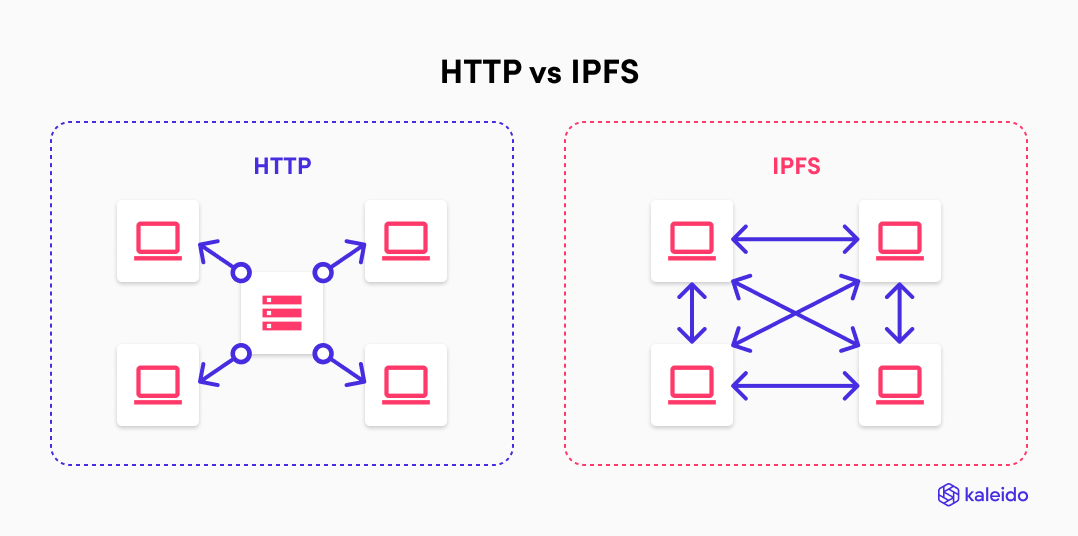
IPFS for distributed content storage
The Interplanetary File System replaces centralized servers with a peer-to-peer network, storing data blocks across multiple nodes. Instead of relying on a single location, content is addressed by its cryptographic hash, ensuring integrity and availability. This structure prevents takedowns since no single entity controls the entire dataset. Developers can host immutable archives that remain accessible even if specific nodes go offline, offering resilience against targeted censorship campaigns. -
Freenet for censorship-resistant publishing
Freenet operates as a darknet, allowing users to publish and retrieve documents without revealing their identity or location. It uses a distributed hash table to store data across participating nodes, making it nearly impossible for authorities to locate the original publisher. This tool is ideal for whistleblowers and journalists needing to share sensitive information securely, as the network’s design inherently obscures the source of the content from external surveillance. -
Loki Network for private messaging
Loki Network combines decentralized messaging with blockchain-based identity verification, ensuring that only intended recipients can read messages. It utilizes a mixnet architecture to obscure metadata, preventing anyone from linking a sender to a receiver. This approach protects against traffic analysis, a common tactic used by censors to identify and block dissident communications. Users gain confidence that their conversations remain private and untraceable by third parties. -

Zeronet for decentralized website hosting
Zeronet enables users to host websites directly from their computers using Bitcoin’s cryptography for identity verification. Unlike traditional hosting, these sites are distributed across a peer-to-peer network, meaning no central server can be shut down to silence content. Visitors fetch data from multiple peers, ensuring availability even if the original host goes offline. This model empowers individuals to publish uncensorable blogs, forums, and news outlets without relying on corporate infrastructure.
Pick the right fit
Choosing a censorship-resistant tool requires matching the software to your specific threat model. A tool that works for bypassing a national firewall may fail against targeted IP blocking or deep packet inspection. Start by identifying the primary censor: is it a national government, a corporate IT department, or a platform ban? This distinction determines whether you need network-level obfuscation or application-level anonymity.
Evaluate the tradeoff between usability and security. High-security tools often sacrifice speed and ease of use to mask traffic patterns effectively. If you need to stream video or play games, prioritize tools with low-latency obfuscation. For sensitive document transfers or anonymous publishing, choose tools with stronger metadata protection, even if they slow down your connection.
Consider the operational security (OpSec) burden. Some tools require manual configuration of bridges or proxy settings, which can be a barrier for non-technical users. Others offer one-click solutions but may log less identifiable metadata at the cost of relying on a central operator. Check if the tool supports pluggable transports like meek or obfs4, which disguise traffic as ordinary HTTPS or cloud storage requests.
Finally, verify the tool’s update frequency and community transparency. Censorship techniques evolve rapidly, requiring constant protocol updates. Tools that are open-source with active, public development channels are generally more trustworthy than closed-source binaries. Look for tools that publish their technical specifications and have undergone independent security audits.
| Criteria | High Security | Ease of Use |
|---|---|---|
| Setup Complexity | Complex, manual config | One-click install |
| Speed Impact | Significant latency | Minimal impact |
| Metadata Leakage | Minimal | Moderate |


Frequently asked: what to check next
Helpful gear
Use these product recommendations as a starting point, then choose the size, material, and price point that fit how you actually use the gear.



As an Amazon Associate, we may earn from qualifying purchases.
No comments yet. Be the first to share your thoughts!