
Censorship resistance 2026 budget
Building a censorship-resistant setup in 2026 means balancing cost, durability, and physical access. You are not just buying hardware; you are buying redundancy. When networks are throttled or blocked, your ability to maintain digital sovereignty depends on having reliable, accessible tools that work offline or via low-bandwidth connections.
The Core Router
The foundation of any resilient setup is a router that supports custom firmware like OpenWrt or DD-WRT. This allows you to run transparent proxies, Tor bridges, or Nym mix nodes directly at the network edge. Look for devices with strong community support and long-term firmware availability. A reliable router ensures that your entire household or office traffic can be routed through privacy-preserving channels without requiring individual device configuration.
Portable Hotspots
Cellular backup is no longer optional. In 2026, as internet shutdowns become more common in various regions, a portable LTE/5G hotspot provides a separate path to the internet that is independent of your primary ISP. Choose a device that supports multiple carriers and has a long battery life. This allows you to disconnect from a censored local network and reconnect via cellular data, often using different routing protocols to bypass blocks.
Storage and Backup
Censorship often targets data accessibility. Encrypted external SSDs or ruggedized USB drives are essential for storing critical data offline. Ensure these devices are compatible with multiple operating systems and have hardware encryption if possible. Regularly backing up data to multiple physical locations creates a "air-gapped" safety net, ensuring your information survives even if digital access is completely severed.
Shortlist real options
The 2026 landscape for digital sovereignty requires tools that function when infrastructure is actively suppressed. Censorship resistance in crypto and web3 refers to the inability to selectively exclude technically valid transactions or communications from a network. This is not just a theoretical ideal; it is a functional requirement for users in regions where access is throttled or blocked.
Comparing these platforms reveals distinct trade-offs between anonymity, throughput, and ease of use. The following table outlines the primary mechanisms each option uses to maintain connectivity and data integrity.
Each platform solves a different layer of the censorship problem. Nym uses a mixnet to obscure the source and destination of traffic, making it difficult for state-level actors to block specific endpoints without disrupting all traffic. Tor remains the gold standard for general browsing but suffers from known exit node risks. Stellar offers a permissionless ledger that resists transaction censorship through its unique validator consensus, while Arweave ensures that information, once published, cannot be taken down. For developers and users prioritizing metadata privacy, Nym is currently the most robust option for 2026. Its roadmap specifically addresses the increasing sophistication of deep packet inspection tools used by restrictive regimes. However, this security comes at the cost of speed, making it less ideal for real-time video or high-frequency trading.
As an Amazon Associate, we may earn from qualifying purchases.
Inspect the expensive parts
When evaluating censorship-resistant platforms, the cost of failure is not just downtime—it is total exclusion. A platform that looks decentralized on paper may still rely on a handful of nodes that can be pressured or shut down. This section provides a practical checklist to inspect the expensive failure points before you commit resources.
Check the number of active validators. If fewer than 100 nodes secure the network, the system is vulnerable to coordinated attacks or regulatory pressure. Look for geographically diverse validators to ensure no single jurisdiction can halt the chain.
Submit a test transaction that is technically valid but potentially undesirable to a central authority. If the transaction is delayed or dropped without a clear protocol reason, the platform is not truly censorship-resistant. This is the most direct test of resilience.
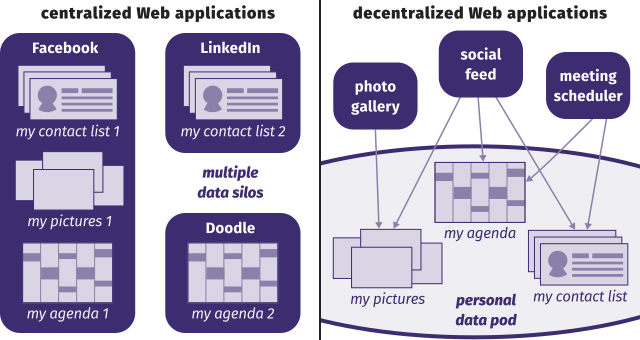
Ensure the node software is open-source and can be compiled from source without proprietary dependencies. If you cannot run a full node independently, you are relying on the goodwill of a centralized provider, which defeats the purpose of digital sovereignty.
Examine how protocol upgrades are decided. If a small group of developers or a foundation can force changes without broad consensus, the network can be altered to introduce censorship filters. Look for on-chain governance or clear, immutable rules.
Investigate if users can easily withdraw assets or data. If the platform requires complex permissions or has hidden fees for exiting, it may be designed to trap users. True censorship resistance includes the right to leave without penalty.

As an Amazon Associate, we may earn from qualifying purchases.
Plan for Ownership Costs
Buying a censorship-resistant platform is just the first transaction. The real financial weight comes from the ongoing overhead required to keep the system functional and, more importantly, uncensorable. A cheap upfront price often masks expensive maintenance realities that only become clear when you need to deploy.
The Hidden Cost of Maintenance
Decentralized infrastructure is not "set and forget." Unlike centralized services where the provider handles updates and security patches, you are responsible for the health of your nodes or hardware. This means budgeting for server uptime, electricity, and the time spent troubleshooting connectivity issues. If your node goes offline, you aren't just losing convenience; you are losing the ability to transact or communicate without permission.
When "Cheap" Stops Being Cheap
The most expensive mistake is underestimating the cost of resilience. A low-cost VPS or basic hardware wallet might seem like a bargain, but if it lacks the redundancy or security features needed to withstand targeted censorship or hardware failure, you pay for it in lost data or frozen assets. True sovereignty requires redundancy—backups, multiple access points, and secure storage—which multiplies your initial outlay.
Concrete Checks Before You Buy
Before committing to a platform, calculate the total cost of ownership (TCO) over two years. Include:
- Hardware depreciation: Will your devices need upgrading to support new cryptographic standards?
- Network fees: High transaction costs can erode the value of small, frequent actions.
- Security tools: Do you need additional encryption software or hardware keys?
"Censorship resistance is widely viewed as a core attribute of distributed ledgers. Censorship resistance refers to the inability to selectively exclude technically valid but undesirable transactions from the blockchain." — SSRN Research
Recommended Tools for Sovereignty
To build a resilient setup, you need reliable hardware and secure storage solutions. The following products are commonly used by individuals prioritizing digital sovereignty and censorship resistance.


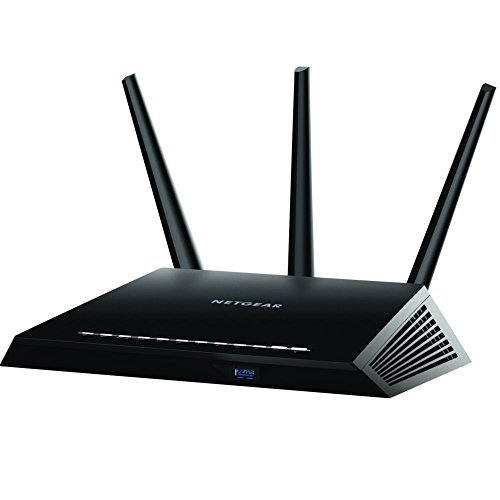
As an Amazon Associate, we may earn from qualifying purchases.
Investing in these tools upfront reduces the risk of catastrophic failure later. Sovereignty is a service you pay for continuously, not a product you buy once.
Censorship resistance 2026: what to check next
Before choosing a platform, it helps to separate the technical ideal from the practical reality. Censorship resistance is not a binary switch; it is a spectrum where different actors—users, builders, or validators—can influence the final outcome.
What is censorship resistance in crypto?
Censorship resistance means no single party can prevent participation in a network. As noted by the New York Fed, public permissionless blockchains are designed so that access is unhampered by gatekeepers. In 2026, this means anyone can broadcast a valid transaction without prior approval from a centralized authority.
What is censorship in blockchain?
At its core, blockchain censorship is the selective exclusion of technically valid transactions. It occurs when validators or miners refuse to include specific transactions in a block, often due to regulatory pressure or corporate policy. This undermines the core promise of distributed ledgers, which is to be resistant to such selective exclusion.
How do Proof-of-Work and Proof-of-Stake compare?
The consensus mechanism matters for long-term resilience. Bitcoin’s Proof-of-Work relies on computational cost, making censorship economically expensive. Ethereum’s Proof-of-Stake relies on staked capital. While both are resistant, the economic barriers differ, affecting how easily a well-funded adversary might attempt to suppress transactions in specific scenarios.
Why do platforms need to be censorship-resistant?
Without it, platforms are vulnerable to shutdowns or content removal by governments or corporations. For digital sovereignty, this means your data and assets remain under your control, regardless of political shifts or corporate policy changes. It ensures that the network remains a neutral public utility rather than a private gated community.
No comments yet. Be the first to share your thoughts!