
The 2026 censorship resistance shift
The landscape of digital privacy has fractured. In 2026, the era of relying on a single VPN provider to mask your identity is effectively over. Governments from the Middle East to the European Union have deployed sophisticated deep packet inspection tools capable of identifying and blocking traditional VPN traffic. This state-level pressure has forced a pivot toward decentralized infrastructure, where censorship resistance is no longer a feature but the foundational architecture.
The shift is moving away from centralized gatekeepers toward mesh networks and Byzantine Fault Tolerant (BFT) protocols. Unlike legacy systems that depend on a few major servers, these decentralized networks distribute traffic across thousands of nodes. This structure makes it nearly impossible for any single authority to shut down communication channels without taking down the entire network. As noted in industry roadmaps, the goal is to create systems where censorship is structurally infeasible rather than just difficult.
This transition is evident in the rise of privacy-focused protocols like Nym, which utilize mix-nets to obscure metadata alongside content. The focus has expanded from simple transaction privacy to comprehensive network-level anonymity. By decentralizing the trust model, these technologies aim to ensure that access to information and communication remains a right rather than a privilege granted by service providers or governments.
Mesh Networks and DePIN Infrastructure
Decentralized Physical Infrastructure Networks (DePIN) are reshaping how we think about censorship-resistant connectivity. By distributing network nodes across a wide geographic area, these systems remove single points of failure that authoritarian regimes or centralized ISPs typically exploit to block access. Unlike traditional cloud services that rely on a few data centers, DePINs leverage idle hardware from everyday users to create resilient, self-healing communication layers.
The core advantage lies in the economic and technical alignment of participants. When users run nodes, they are incentivized to keep the network online, making it exponentially harder for any single entity to shut down the infrastructure. This model is particularly effective for mesh networking tools, which allow devices to connect directly to one another without relying on a central router. As censorship tools evolve, the combination of encrypted protocols and physical decentralization offers a robust defense against increasingly sophisticated internet blackouts.
To understand the practical differences between these approaches, it helps to compare their operational characteristics. The table below outlines how various mesh and DePIN tools stack up against each other regarding censorship resistance, usability, and infrastructure needs.
| Tool Type | Censorship Resistance | Ease of Use | Infrastructure Dependency |
|---|---|---|---|
| Nym Network | High (Mixnet) | Medium | None (Software) |
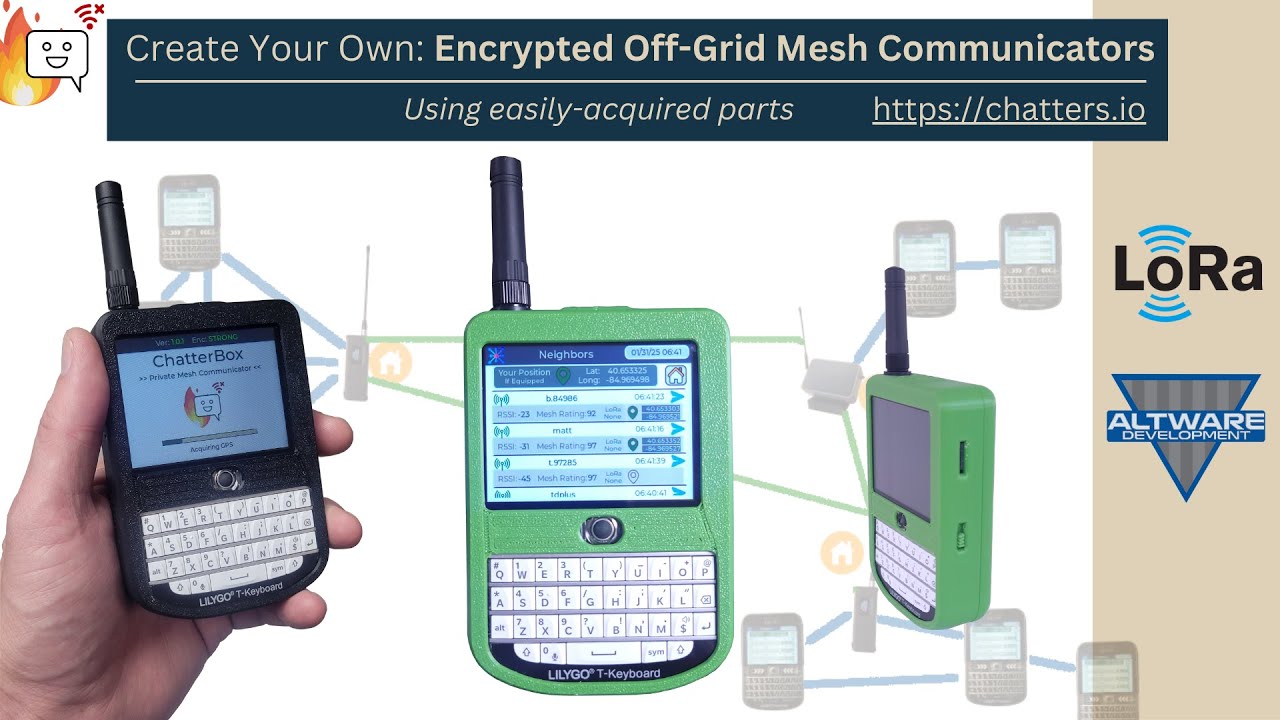
| LoRaWAN Mesh | High (Physical) | Low | Hardware Nodes |
| Briar | High (Bluetooth/BT) | High | Smartphones |
| Helium Mobile | Medium (Carrier) | High | Hotspots |
| ZeroTier | Medium (Overlay) | High | Existing Internet |
Blockchain consensus and transaction privacy
Modern blockchain architectures are shifting from passive permissionlessness to active cryptographic enforcement. Protocols like Aptos and Sui utilize multi-proposer Byzantine Fault Tolerant (BFT) consensus to ensure that transaction ordering cannot be manipulated by a single validator. This structural design means that even if a majority of nodes collude, they cannot selectively censor specific transactions without halting the entire network, creating a baseline of censorship resistance that is mathematically verifiable rather than merely aspirational.
At the application layer, zero-knowledge (ZK) proofs provide the necessary opacity to protect user intent. By allowing transactions to be validated without revealing sender, receiver, or amount, ZK-cryptography prevents external actors from targeting specific users based on their activity. This "hiding" mechanism complements the underlying BFT layer, ensuring that censorship attempts lack the intelligence required to be effective. The combination of protocol-level ordering guarantees and application-level privacy creates a dual shield against regulatory or corporate interference.
The resilience of this model is evident in historical market data. During periods of intense regulatory scrutiny, networks with robust censorship-resistant protocols have maintained transaction finality and fee stability, whereas centralized exchanges faced liquidity freezes. This divergence highlights the value of infrastructure that operates independently of traditional financial choke points. As more teams build privacy solutions—ranging from stealth addresses to full zk-SNARK circuits—the gap between compliant centralized finance and truly resistant decentralized networks continues to widen.
Mesh networks vs. blockchain choices that change the plan
Censorship resistance is not a single technology but a spectrum of tradeoffs between speed, cost, and accessibility. Mesh networks rely on physical proximity and local routing to bypass central points of failure, while blockchain-based protocols use cryptographic consensus to enforce rules across global distances. Understanding where each model excels helps determine the right infrastructure for high-stakes communication or financial transactions.
Speed and Throughput
Blockchain-based censorship resistance, particularly in multi-proposer Byzantine Fault Tolerant (BFT) protocols like Aptos and Sui, prioritizes high throughput alongside security. These systems allow multiple proposers to work in parallel, reducing the latency typically associated with traditional single-leader blockchains. However, this speed comes with complexity; as throughput increases, the risk of network partitioning grows, potentially creating windows where censorship or transaction ordering attacks become feasible.
Mesh networks, by contrast, operate with minimal latency because data hops between nearby nodes rather than traversing a global consensus layer. This makes them ideal for real-time communication in areas with intermittent internet access. The tradeoff is scalability; as the network grows, maintaining connectivity without a central coordinator becomes computationally expensive and difficult to manage.
Cost and Accessibility
Running a blockchain node requires significant computational resources and energy, creating a barrier to entry that can centralize power among wealthy validators. This economic model ensures robust security but limits who can participate in maintaining the network's censorship resistance. DePIN (Decentralized Physical Infrastructure Networks) attempt to lower this barrier by incentivizing users to contribute hardware, yet the cost of participation remains higher than simply using a smartphone app.
Mesh networks offer lower entry costs for users, as they often require only standard consumer hardware like routers or smartphones. However, the infrastructure cost is distributed among many users who must physically be near each other. This geographic constraint makes mesh networks highly accessible in local communities but ineffective for global, anonymous communication where users are dispersed.
When to Use Which Model
For financial transactions where immutability and global accessibility are paramount, blockchain-based protocols provide the strongest guarantee against censorship. No single entity can block a Bitcoin transaction, regardless of the user's location. This makes it the preferred choice for preserving wealth and ensuring fair participation in decentralized economies.
For real-time communication in censored regions, mesh networks offer superior resilience. When internet infrastructure is targeted or shut down, local mesh networks can maintain connectivity between neighbors, providing a lifeline for information flow. The choice ultimately depends on whether the priority is global, immutable record-keeping or local, immediate communication.
| Feature | Mesh Networks | Blockchain Protocols |
|---|---|---|
| Latency | Low (local hops) | Higher (consensus time) |
| Scalability | Limited by geography | Global, but complex |
| Entry Cost | Low (consumer hardware) | High (validator resources) |
| Censorship Vector | Physical isolation | Network partitioning |
Choose tools for 2026 censorship resistance
Selecting the right infrastructure depends on your specific threat model. Mesh networks offer resilience against total internet blackouts by routing traffic through local nodes, while encrypted protocols like Tor or I2P protect data integrity against surveillance and deep packet inspection. Your choice hinges on whether you need to bypass content filters or maintain connectivity when infrastructure is severed.
Decentralized Physical Infrastructure Networks (DePINs) are emerging as a hybrid solution, combining hardware decentralization with software resilience. These networks challenge centralized control by distributing service provision across independent operators, prioritizing user privacy and fair participation incentives. For high-stakes scenarios, hardware wallets and secure devices ensure that your identity and assets remain protected even if your connection is compromised.
![Starlink Mini Router - High-Performance WiFi Extender for Mesh Network | Starlink Router Mini [OEM] | New in Box](https://m.media-amazon.com/images/I/31dV06vfKfL._AC_UY500_QL65_.jpg)
As an Amazon Associate, we may earn from qualifying purchases.
Common questions on censorship resistance
Readers often ask how censorship resistance applies to crypto, mesh networks, and decentralized physical infrastructure. The core idea is simple: no single entity can block transactions or communications without the consent of the network participants.
No comments yet. Be the first to share your thoughts!